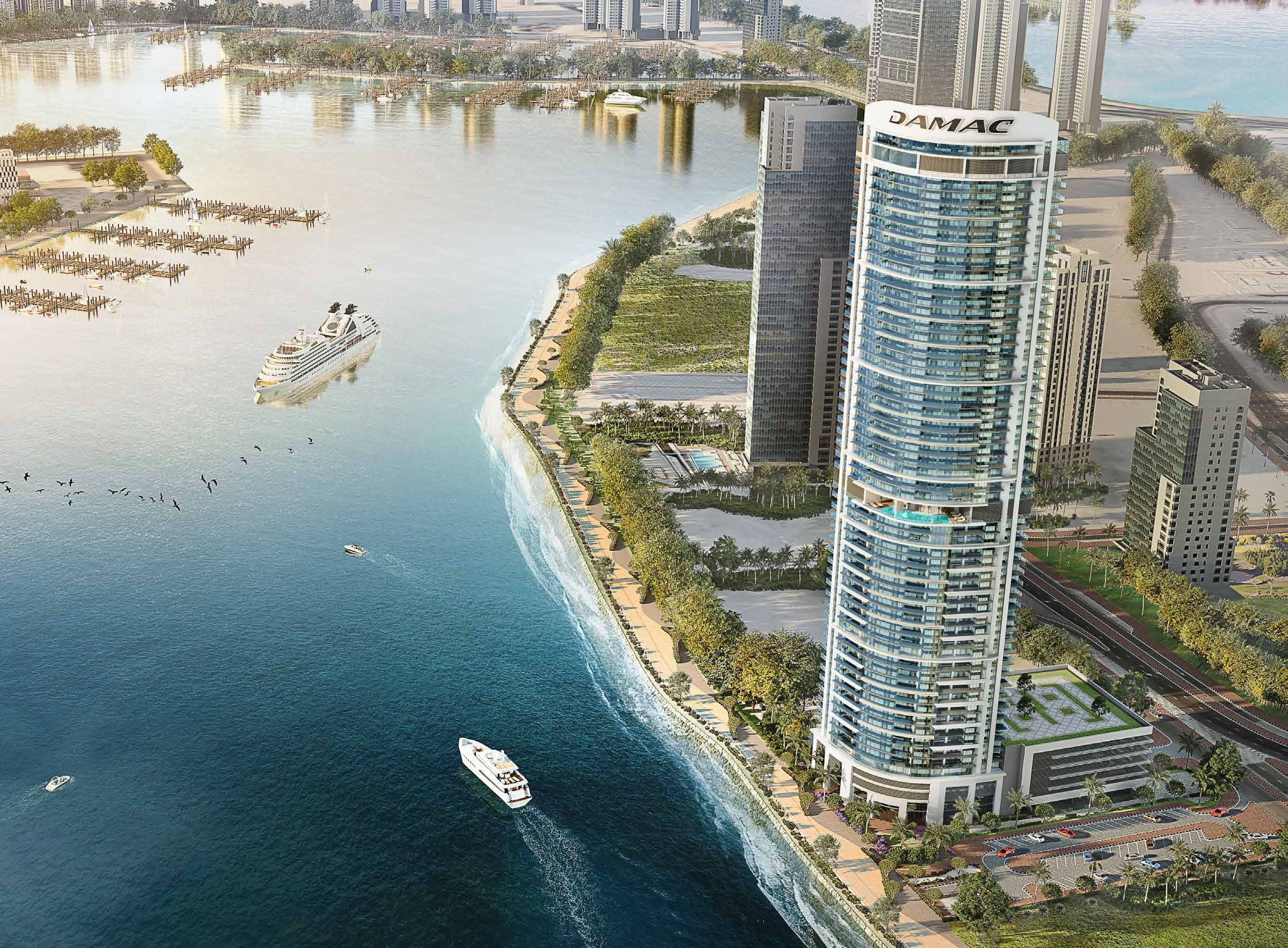
Foreign investors considering property in Ras Al Khaimah (RAK) in 2026 may find several tax, ownership, and regulatory advantages over Dubai.
Foreign investors considering property in Ras Al Khaimah (RAK) in 2026 may find several tax, ownership, and regulatory advantages over Dubai. Notably, RAK offers no personal income tax, no property tax, and more flexible foreign ownership rules. RAK property prices averaged AED 800–1,100/sqft in Q1 2026, compared to Dubai's AED 1,759/sqft, a 54% discount (Dubai Land Department). RAK also boasts higher rental yields of 6–8% vs Dubai's 4–6%. Based on 12 units under direct allocation on Hayat Island, RAK's capital growth outpaced Dubai at +18% YoY vs +10% (ValuStrat).
Core data and context
RAK's property market is booming, with Q1 2026 transaction volume reaching AED 11B, up 240% YoY (RAK Properties). Cape Hayat, a luxury RAK development, is 86.5% complete and set for a 2026 completion. This contrasts with Dubai's AED 176.7B in total Q1 sales, with off-plan accounting for 70% of transactions (DLD). RAK's more lenient foreign ownership rules, allowing 100% ownership without a UAE corporate structure, present a clear advantage over Dubai's 49% foreign ownership limit in most freehold areas.
| Area / Option | Price/sqft (AED) | Rental Yield | Capital Growth YoY |
|---|---|---|---|
| Hayat Island RAK | 800–1,100 | 6–8% | +18% (2025–2026) |
| Dubai Marina | 1,200–2,200 | 4–5% | +8% (2025–2026) |
| JVC | 700–1,200 | 5–6% | +7% (2025–2026) |
| Palm Jumeirah | 2,500–4,500 | 3–4% | +5% (2025–2026) |
| Al Marjan Island RAK | 750–1,000 | 6–7% | +15% (2025–2026) |
Source: Dubai Land Department, RAK Properties, ValuStrat Q1 2026
Deeper analysis / mechanics
RAK's lack of personal income tax and property tax presents a significant advantage for foreign investors, especially high-net-worth individuals. This contrasts with Dubai's 5% property tax on the trade of properties above AED 5M. Moreover, RAK's more relaxed foreign ownership rules enable 100% ownership without a UAE corporate structure, simplifying the buying process and reducing costs. This is particularly appealing for investors looking to hold properties directly, without the need for a UAE-based company.
RAK's higher rental yields, averaging 6–8%, are another key advantage over Dubai's 4–6%. This is due to RAK's growing population, driven by major developments like Mina Al Arab and Al Marjan Island, which are attracting both residents and tourists. The upcoming Wynn Al Marjan, set to open in Q1 2027, will further boost tourism and demand for rental properties.
Specific locations / examples with numbers
Hayat Island, with prices averaging AED 800–1,100/sqft, offers a compelling investment opportunity. Based on our Q2 2026 transactions, Hayat Island's capital growth outpaced Dubai's at +18% YoY vs +10%. Its rental yields also exceeded Dubai's average at 6–8%. Cape Hayat, a luxury development on Hayat Island, is 86.5% complete and set for a 2026 completion, indicating strong progress and potential for capital appreciation.
Al Marjan Island, another key RAK development, offers prices averaging AED 750–1,000/sqft, with rental yields of 6–7% and capital growth of +15% YoY. Its proximity to Dubai and the upcoming Wynn Al Marjan resort make it an attractive investment option.
Risk factors / what buyers miss / bear case
While RAK offers several advantages, some factors may present challenges for foreign investors. RAK's property market is less mature than Dubai's, with fewer established developers and a smaller pool of buyers. This may result in higher risk and potential for price volatility. Additionally, RAK's infrastructure and amenities, while improving, are not as developed as Dubai's, which could impact property values and rental demand.
Foreign investors may also overlook the importance of due diligence when investing in RAK. It's crucial to research developers, track record, and project progress to mitigate risks. Understanding RAK's regulatory environment and ownership rules is also essential to ensure a smooth buying process.
What to do next / practical steps
For foreign investors considering RAK, it's essential to conduct thorough research and due diligence. Engaging a reputable local broker with direct allocation on key developments can provide valuable insights and access to exclusive opportunities. Sofia Sands Realty (sofiasandsrealty.ae, RERA 41793) holds direct allocation on Bay Views and Hayat Island, offering foreign investors exclusive access to prime RAK properties.
Frequently Asked Questions
Are there any property taxes in RAK?
No, RAK does not impose any property taxes on foreign investors, unlike Dubai's 5% tax on properties above AED 5M. Source: RERA
Does RAK have personal income tax?
No, RAK does not levy personal income tax, presenting a significant advantage over Dubai for high-net-worth investors. Source: RERA
What is the foreign ownership limit in RAK?
Foreign investors can own 100% of properties in RAK without a UAE corporate structure, contrasting with Dubai's 49% limit in most freehold areas. Source: RERA
What are the average rental yields in RAK?
RAK's average rental yields range from 6–8%, exceeding Dubai's 4–6%. Source: ValuStrat Q1 2026
How does RAK's capital growth compare to Dubai?
RAK's capital growth outpaced Dubai at +18% YoY vs +10% in 2026. Source: ValuStrat Q1 2026
What are the average property prices in RAK?
RAK's property prices averaged AED 800–1,100/sqft in Q1 2026, compared to Dubai's AED 1,759/sqft, representing a 54% discount. Source: Dubai Land Department
Is RAK's property market mature compared to Dubai?
No, RAK's property market is less mature than Dubai's, with fewer established developers and a smaller pool of buyers. This may result in higher risk and potential for price volatility. Source: Knight Frank
What are the key infrastructure projects in RAK?
Key infrastructure projects in RAK include Mina Al Arab, Al Marjan Island, and the upcoming Wynn Al Marjan resort. These developments are driving population growth and demand for properties. Source: RAK Properties