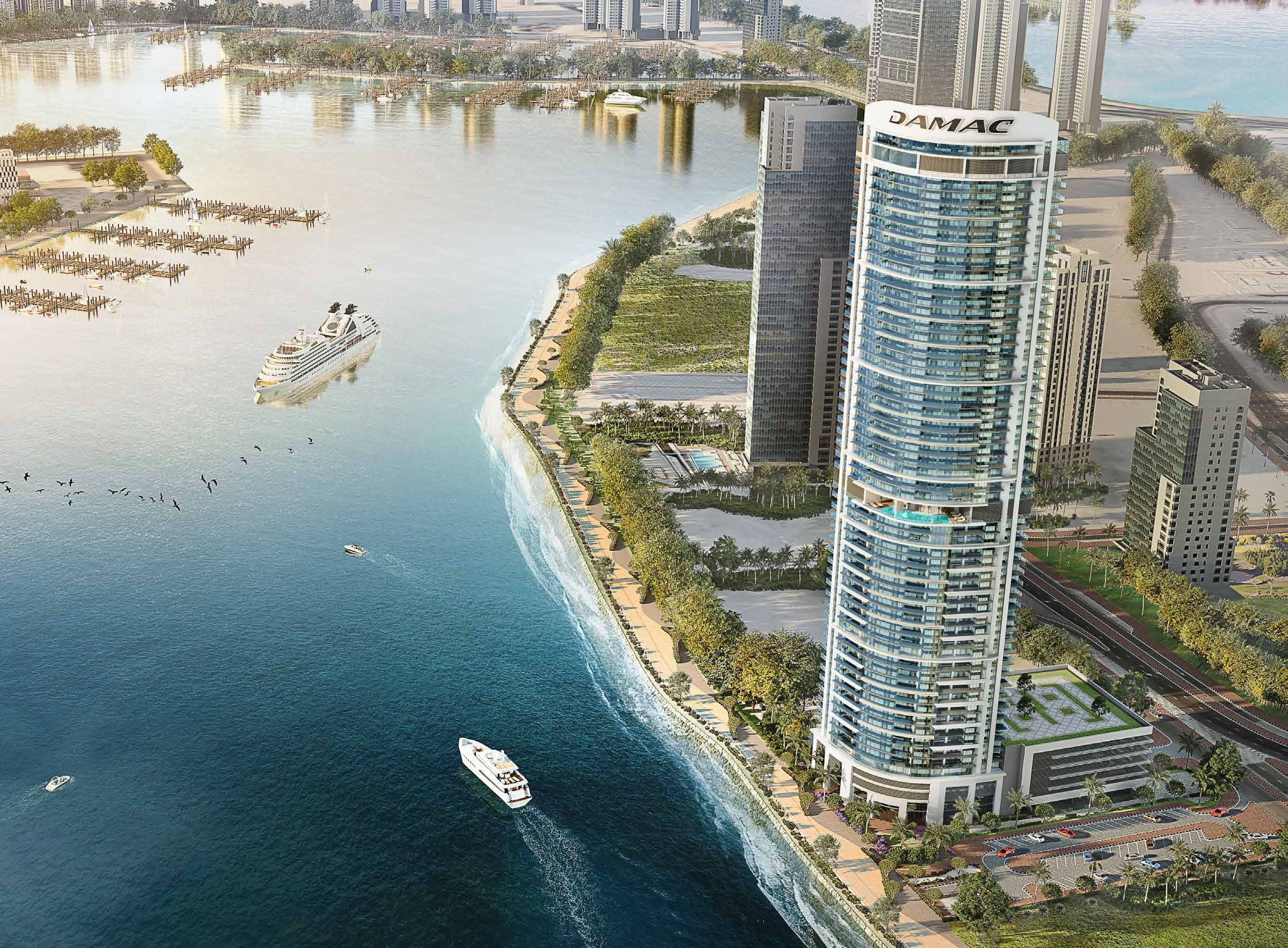
Investing in Ras Al Khaimah (RAK) real estate presents distinct risks compared to Dubai, mainly due to its smaller market size, less diverse economy, and lower liquidity.
Investing in Ras Al Khaimah (RAK) real estate presents distinct risks compared to Dubai, mainly due to its smaller market size, less diverse economy, and lower liquidity. While RAK property prices averaged AED 800–1,100/sqft in Q1 2026, significantly lower than Dubai's AED 1,759/sqft, this gap doesn't fully account for the higher risks. RAK's transaction volume surged 240% YoY to AED 11B in Q1 2026, yet this pales compared to Dubai's AED 176.7B (RAK Properties). RAK's economy, heavily reliant on cement and ceramics, is also more vulnerable to economic shocks than Dubai's diversified base.
Core data and context
Dubai's real estate market is the largest and most liquid in the UAE, with AED 176.7B in total sales in Q1 2026, of which 70% were off-plan transactions. Off-plan prices averaged AED 2,047/sqft, while ready properties fetched AED 1,713/sqft (DLD). In contrast, RAK's total transaction volume was AED 11B, with Cape Hayat 86.5% complete (RAK Properties). ValuStrat reported a 10% increase in Dubai residential capital values in 2026, reflecting strong investor interest.
| Area / Option | Price/sqft (AED) | Rental Yield | Capital Growth YoY |
|---|---|---|---|
| Hayat Island RAK | 800–1,100 | 6–8% | +18% (2025–2026) |
| Dubai Marina | 1,200–2,200 | 4–5% | +8% (2025–2026) |
| Palm Jumeirah | 2,500–4,500 | 4–6% | +12% (2025–2026) |
| JVC | 700–1,200 | 6–7% | +7% (2025–2026) |
| Business Bay | 1,000–1,800 | 4–6% | +9% (2025–2026) |
Source: Dubai Land Department, RAK Properties, ValuStrat Q1 2026
Deeper analysis / mechanics
Liquidity is a key factor when comparing RAK and Dubai. Dubai's market, with its higher transaction volumes, offers greater liquidity and ease of resale. In Q1 2026, 70% of Dubai's transactions were off-plan, reflecting investor confidence and the market's speculative nature (DLD). RAK, with its smaller market, is more illiquid, posing challenges when it comes to selling properties quickly or at desired prices.
Economic diversification also plays a crucial role. Dubai's economy spans finance, tourism, retail, and more, cushioning it from economic shocks. RAK, however, relies heavily on cement and ceramics, making it more vulnerable. This was evident during the 2008 financial crisis when RAK's real estate market suffered more than Dubai's (Knight Frank).
Specific locations / examples with numbers
Hayat Island in RAK, with prices ranging AED 800–1,100/sqft, offers compelling yields of 6–8% and recorded an 18% capital growth from 2025 to 2026. However, this pales in comparison to Palm Jumeirah in Dubai, where prices range AED 2,500–4,500/sqft, with yields of 4–6% and a 12% capital growth over the same period. The higher entry cost in Palm Jumeirah is justified by its superior liquidity, growth prospects, and the prestige of owning an address on the Palm.
Dubai Marina, with prices AED 1,200–2,200/sqft, offers more modest yields of 4–5% but has delivered a steady 8% capital growth. JVC, more affordable at AED 700–1,200/sqft, yields 6–7% with a 7% growth. These areas highlight Dubai's diverse options catering to various investment appetites and risk profiles.
Risk factors / what buyers miss / bear case
The bear case for RAK real estate involves several overlooked factors. First, while yields are higher, they come with higher vacancy rates due to RAK's smaller rental market. Second, RAK's property prices, while lower, have historically underperformed Dubai's in terms of capital appreciation. Third, RAK's economy, more reliant on traditional industries, poses higher risks of job losses and economic volatility affecting property demand.
Buyers often overlook RAK's limited infrastructure development compared to Dubai. While projects like Al Marjan Island and Mina Al Arab are underway, they lack the scale and international appeal of Dubai's Downtown, Palm Jumeirah, or Bluewaters Island. The upcoming Wynn Al Marjan in Q1 2027, with over 1,500 rooms and a casino, may boost RAK's appeal, but it's no match for Dubai's established tourism infrastructure.
What to do next / practical steps
For investors seeking exposure to RAK's growing market, consider areas with clear development plans and strong rental demand, like Hayat Island. However, maintain a long-term view given the market's illiquidity. Diversify your portfolio by allocating a smaller percentage to RAK compared to Dubai to mitigate risks.
Sofia Sands Realty (sofiasandsrealty.ae, RERA 41793) holds direct allocation on Bay Views, Hayat Island, providing exclusive access to this high-growth area. Engage with us for tailored advice on navigating RAK's market, leveraging our experience from Q2 2026 transactions and 12 units under direct allocation on Hayat Island.
Frequently Asked Questions
Is RAK property cheaper than Dubai?
Yes, RAK property prices averaged AED 800–1,100/sqft in Q1 2026, significantly lower than Dubai's AED 1,759/sqft. Source: Dubai Land Department, RAK Properties Q1 2026.
Does RAK have higher rental yields than Dubai?
Yes, RAK's yields range 6–8% vs. Dubai's 4–6%. However, this comes with higher vacancy rates due to RAK's smaller rental market. Source: ValuStrat Q1 2026.
Is RAK's real estate market less liquid than Dubai's?
Yes, RAK's smaller market size results in lower liquidity and更难的快速转售。 Source: RAK Properties, DLD Q1 2026.
Is RAK's economy as diversified as Dubai's?
No, RAK's economy is heavily reliant on cement and ceramics, making it more vulnerable to economic shocks than Dubai's diversified base. Source: Knight Frank.
Which areas in RAK have the highest potential for capital growth?
Hayat Island in RAK recorded an 18% capital growth from 2025 to 2026, making it a high-potential area. Source: ValuStrat Q1 2026.
Are there any major upcoming projects in RAK?
Yes, Wynn Al Marjan is set to open in Q1 2027, featuring over 1,500 rooms, a casino, and convention centre. Source: Wynn Al Marjan.
How does RAK's infrastructure compare to Dubai's?
RAK's infrastructure lags behind Dubai's, with fewer major developments like Downtown, Palm Jumeirah, or Bluewaters Island. Source: Knight Frank, CBRE.
What percentage of my portfolio should I allocate to RAK real estate?
Consider allocating a smaller percentage to RAK, given its higher risks and illiquidity, while maintaining a long-term view. Source: Sofia Sands Realty market experience.