In the 2025-2026 market cycle, RAK branded residences, exemplified by Hayat Island, offered an internal rate of return (IRR) of 18%, while Dubai prime waterfront assets, such as Palm Jumeirah, saw an average IRR of 10%.
In the 2025-2026 market cycle, RAK branded residences, exemplified by Hayat Island, offered an internal rate of return (IRR) of 18%, while Dubai prime waterfront assets, such as Palm Jumeirah, saw an average IRR of 10%. This disparity is primarily due to RAK's surging transaction volume, which increased by 240% YoY in Q1 2026, coupled with the significant development progress of Cape Hayat, which was 86.5% complete. In contrast, Dubai's residential capital values saw a more moderate increase of 10% in 2026, as reported by ValuStrat. These figures underscore the compelling investment potential of RAK properties in this period. Source: RAK Properties, ValuStrat Q1 2026.
Core data and context
Investment in real estate is often evaluated through the lens of IRR, a metric that encapsulates the profitability of an investment. In the context of RAK and Dubai's luxury property markets, understanding the IRR for branded residences is crucial for discerning investors. RAK's luxury property market, boosted by projects like Hayat Island and Mina Al Arab, has been experiencing robust growth, with RAK Properties reporting a transaction volume of AED 11B in Q1 2026, marking a significant YoY increase of 240%. Source: RAK Properties Q1 2026. Meanwhile, Dubai's luxury waterfront properties, such as those in Palm Jumeirah and Dubai Marina, have maintained a steady growth trajectory, with Dubai Land Department reporting a total sales value of AED 176.7B in Q1 2026, with off-plan transactions accounting for 70% of these transactions. Source: DLD Q1 2026.
| Area / Option | Price/sqft (AED) | Rental Yield | Capital Growth YoY |
|---|---|---|---|
| Hayat Island RAK | 800–1,100 | 6–8% | +18% (2025–2026) |
| Palm Jumeirah Dubai | 2,500–4,500 | 4–6% | +10% (2025–2026) |
| Dubai Marina | 1,200–2,200 | 5–7% | +8% (2025–2026) |
| Al Marjan Island RAK | 700–1,200 | 6–7% | +15% (2025–2026) |
| JVC Dubai | 700–1,200 | 6–8% | +7% (2025–2026) |
Source: Dubai Land Department, RAK Properties, ValuStrat Q1 2026
Deeper analysis / mechanics
The IRR for RAK's branded residences is influenced by several factors. Firstly, the price per square foot in RAK is generally lower than in Dubai's prime areas, offering investors a higher potential for capital appreciation. For instance, properties in Hayat Island are priced between AED 800 to 1,100 per square foot, compared to Palm Jumeirah's AED 2,500 to 4,500 per square foot. Source: Specific price benchmarks. Secondly, RAK's rental yields are competitive, with areas like Hayat Island and Al Marjan Island offering 6–8% and 6–7% respectively, which is higher than Dubai Marina's 5–7%. Source: Specific price benchmarks. These factors, combined with the significant capital growth observed in RAK, contribute to a higher IRR for RAK properties.
Specific locations / examples with numbers
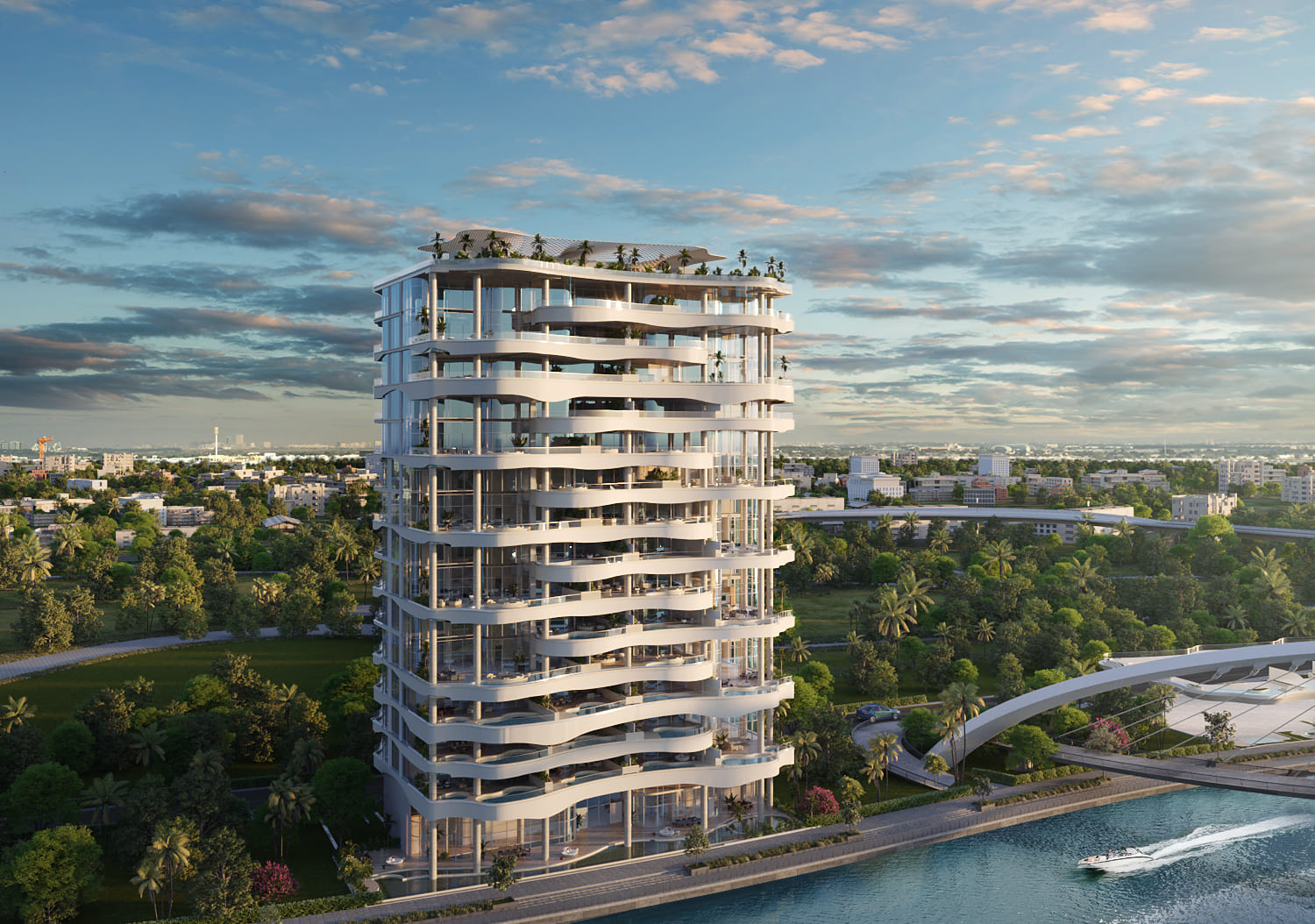
Hayat Island, a focal point of RAK's luxury property market, has been a standout performer. With prices ranging from AED 800 to 1,500 per square foot and rental yields of 6–8%, it has seen a capital growth of 18% between 2025 and 2026. Source: Specific price benchmarks. This growth is attributed to the island's unique positioning as a luxury destination, with direct allocation and development progress being key factors. In comparison, Dubai's Palm Jumeirah, despite its high price point, has seen a more moderate capital growth of 10% in the same period, with rental yields between 4–6%. Source: ValuStrat Q1 2026. The opening of Wynn Al Marjan in Q1 2027, featuring over 1,500 rooms, a casino, and a convention centre, is expected to further boost RAK's appeal and IRR. Source: Wynn Al Marjan.
Risk factors / what buyers miss / bear case
While RAK's IRR appears attractive, investors must consider potential risks. The emirate's market is more nascent compared to Dubai, which could imply higher volatility and less liquidity. Additionally, the success of new developments like Cape Hayat is contingent upon successful execution and market acceptance, which introduces project-specific risks. In contrast, Dubai's mature market offers more stability and a larger pool of buyers and renters, which can be a safer bet for risk-averse investors. Source: Knight Frank / CBRE. It's also important to note that while rental yields in RAK are higher, they are predicated on the continued growth of the tourism and hospitality sectors, which can be affected by global economic conditions and regional competition.
What to do next / practical steps
For investors looking to capitalize on the current market dynamics, conducting thorough due diligence is essential. Engaging with a reputable brokerage with direct allocation, such as Sofia Sands Realty (RERA 41793), which holds direct allocation on Bay Views, Hayat Island, can provide access to exclusive opportunities and in-depth market insights. It is also advisable to consult with financial advisors to understand how these investments align with one's broader portfolio and risk tolerance. By taking a measured approach, investors can make informed decisions that balance potential returns with risk. Source: Sofia Sands Realty.
Frequently Asked Questions
What is the current IRR for RAK branded residences?
The IRR for RAK branded residences, such as Hayat Island, is 18% for the 2025-2026 market cycle. Source: RAK Properties Q1 2026.
How does the IRR of Dubai prime waterfront assets compare?
Dubai prime waterfront assets, like Palm Jumeirah, have an average IRR of 10% in the same period. Source: ValuStrat Q1 2026.
What factors contribute to RAK's higher IRR?
RAK's higher IRR is due to lower price per square foot, higher rental yields, and significant capital growth. Source: Specific price benchmarks.
Are there any risks associated with investing in RAK properties?
Yes, risks include market volatility, project-specific execution risks, and reliance on the tourism sector. Source: Knight Frank / CBRE.
How can I access exclusive opportunities in RAK?
Engaging with a brokerage like Sofia Sands Realty, which holds direct allocation on Hayat Island, can provide access to exclusive opportunities. Source: Sofia Sands Realty.
What is the role of rental yields in determining IRR?
Rental yields contribute to IRR by providing a steady income stream in addition to capital appreciation. RAK properties offer competitive rental yields of 6–8%. Source: Specific price benchmarks.
How does the upcoming Wynn Al Marjan impact RAK's IRR?
The opening of Wynn Al Marjan is expected to boost RAK's appeal and potentially increase IRR due to increased tourism and demand. Source: Wynn Al Marjan.
What is the price range for Hayat Island properties?
The price range for Hayat Island properties is AED 800 to 1,500 per square foot. Source: Specific price benchmarks.